
The Practice of Moonsighting
Everything you need to start sighting the moon and understand the science behind it.
Beginner's Guide
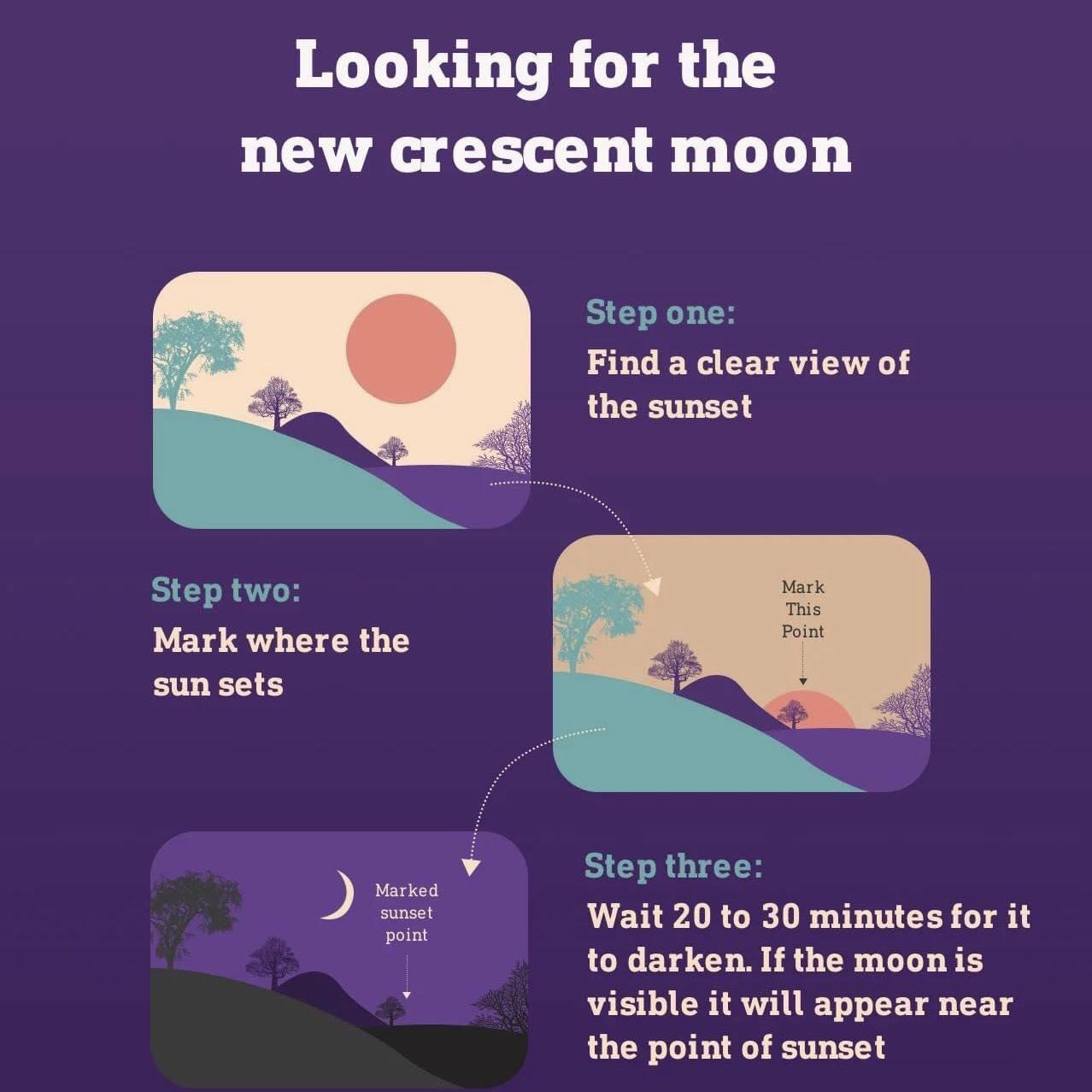
How to Spot the New Crescent
Three simple steps to find the crescent moon on the 29th night of the Hijri month. No special equipment needed—just clear skies and patience.

Understanding Moon Phases
As the moon orbits Earth, sunlight illuminates different portions creating the phases.
The Hijri month begins with the Hilal, the first visible crescent. What astronomers call "new moon" is the dark phase (mihaq) marking the previous month's end.
What's Coming
We're building this resource library with help from our community. Have expertise to share? See below.
Group Activities
Resources for mosques and schools to organise moon sighting events and teach observation skills.
Cultural Heritage
The history and wisdom behind traditional observation methods passed down through generations.
Science & Tradition
How modern astronomy supports and explains traditional Islamic lunar observation practice.
Verification Skills
Learn to evaluate sighting reports and contribute to the accuracy of community observations.
Help Us Build This
NCS is community-driven. If you have knowledge, diagrams, or teaching experience to contribute, we'd love to hear from you.